The UNBODIMENT Project
Category: Research | Role: Performer, Researcher | Venue: Theaterhaus Mitte, Home Studio
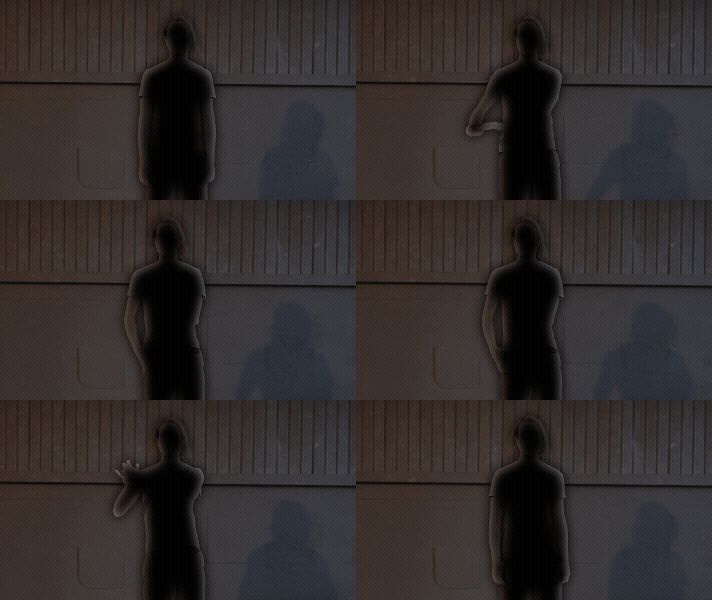
What is a phantom movement, and what is its beauty? How to uncover the invisibility of gestures that move through our social spaces without being performed/perceived? What does it mean to suppress a movement? And how can this become an empowering, aesthetic, and maybe even joyful moment?
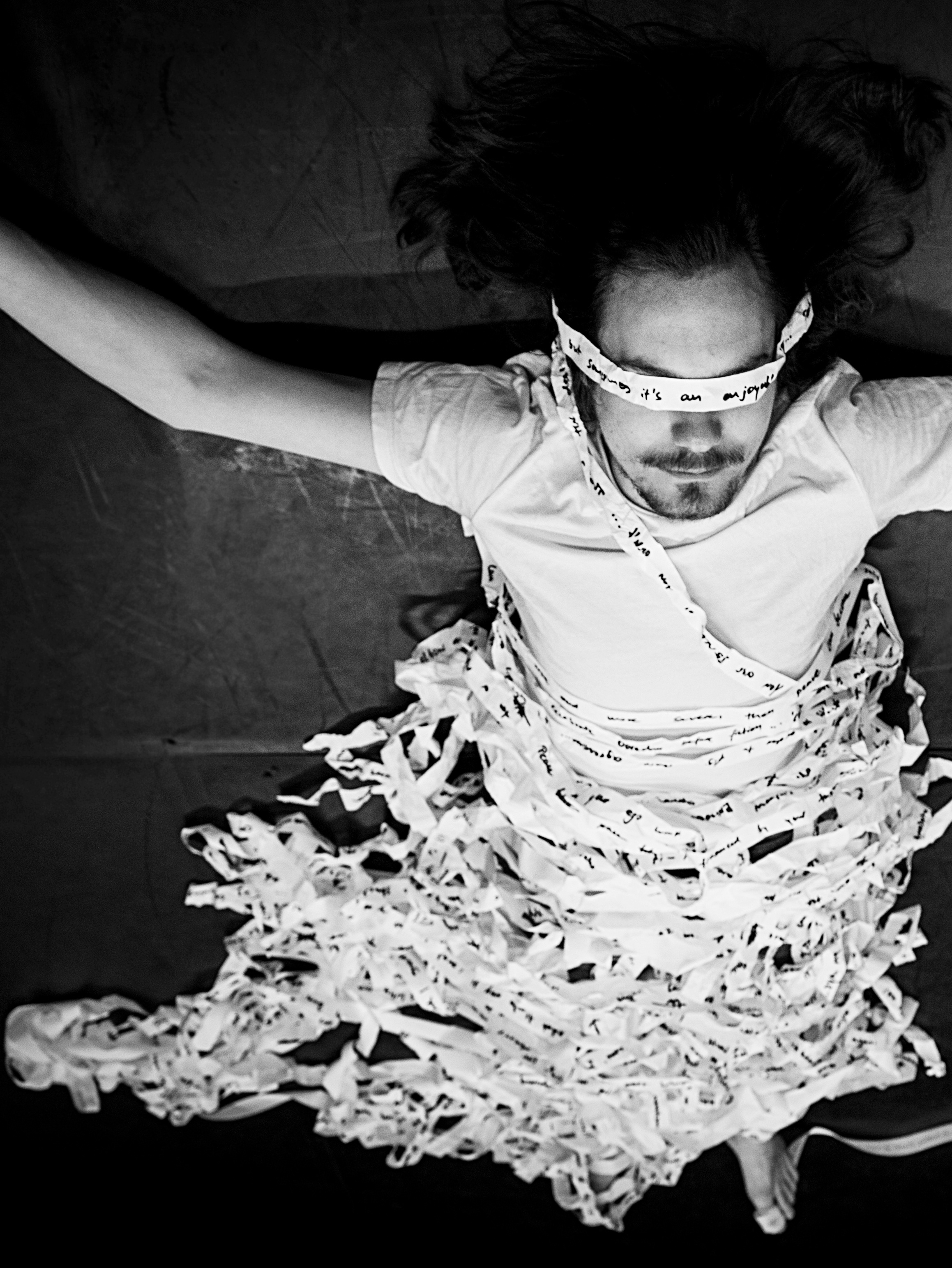
"The UNBODIMENT Project" is the second part of my research series, The Biased Body. It derives from my personal experience as someone who is trying to reflect on their own discriminatory behavior, especially in terms of movements and smaller gestures. I noticed that in moments of potential microaggression performed from my side, I need to consciosly chose not to perform the corresponding movement. What remains is a sort of invisible choreography built of phantom gestures. For this project, I was wondering how to make these empty gestures visible and how to elaborate on a potential counterpart. The experience of deciding against a discriminatory motion cannot guarantee its erasure. Somehow, the traces of violence remain in space - or at least in my bodily consciousness as the perpetrator. I assumed that UNBODIMENT meant to rip off the bodilyness from a movement score and to develop a functioning alternative. And I wanted to know how we can develop strategies to address violence without reproducing it.
In fact, after reflecting a little more on the term, I realized that it could also be quite problematic. I had a conversation with hn. lyonga that made me aware of the risk of using any physical withdrawel from a harmful situation as an avoidance mechanism, i. e., an excuse for not facing one's own role in the conflict.
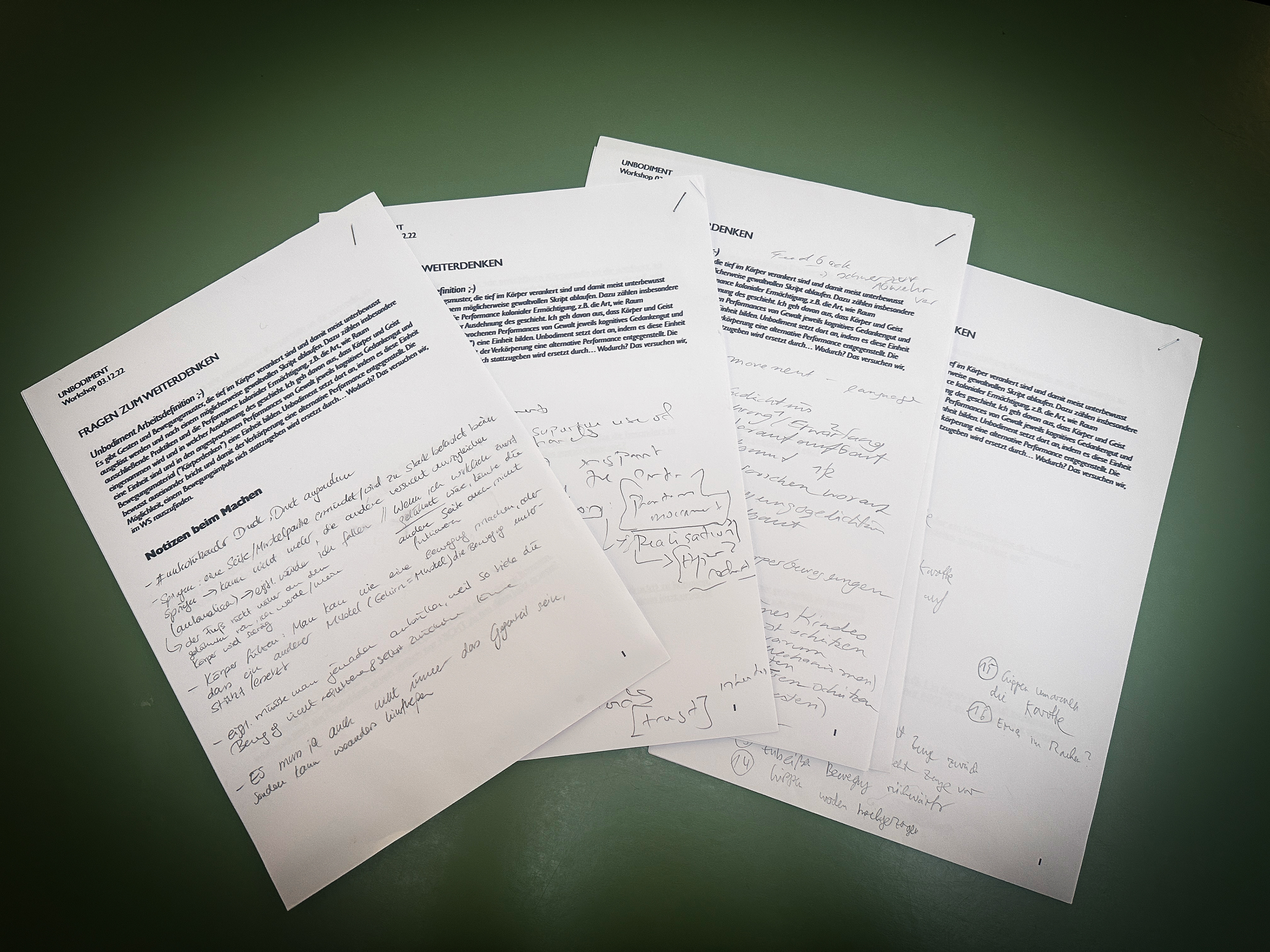
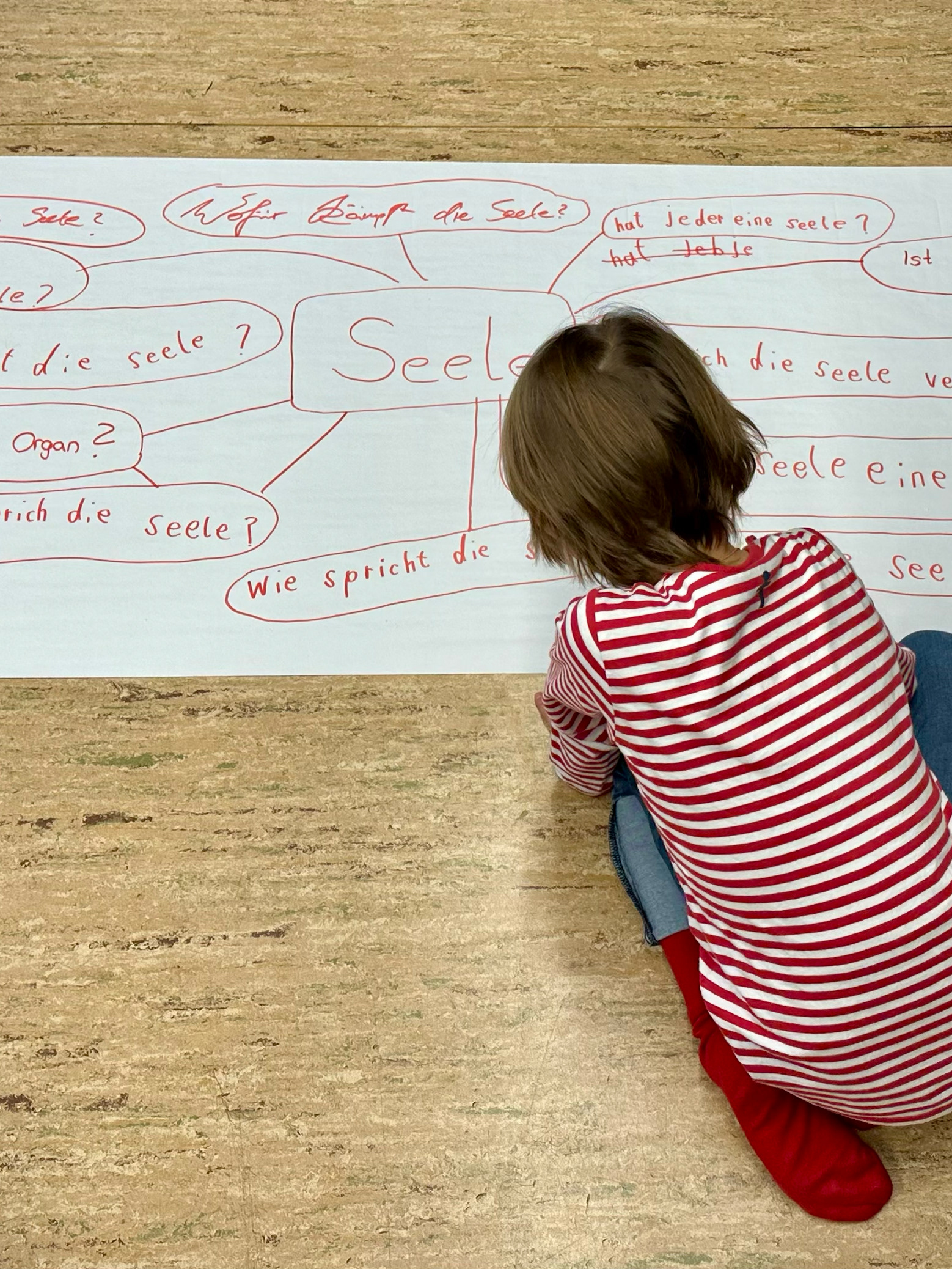
Some of the research forms I handed out during a workshop.
Supported by the Fonds Darstellende Künste with funding from the Federal Government for Culture and the Media within the framework of NEUSTART KULTUR.